

NEET Cutoff Analysis: Detailed 10-Year Trend (2016-2025)
Understand the qualifying marks for UR, OBC, SC, and ST categories
The NEET Cutoff has seen significant shifts over the last decade. To prepare effectively for NEET 2026, it’s essential to understand how the qualifying marks have changed based on exam difficulty and the number of aspirants.
In this analysis, we look at the historical data from 2016 to 2025.
10-Year NEET Cutoff Trend (2016-2025)
| Year | General / UR / EWS | OBC / SC / ST | Trend Note |
|---|---|---|---|
| 2025 | 720–144 | 143–113 | Normalization year |
| 2024 | 720–162 | 161–127 | Record high competition |
| 2023 | 720–137 | 136–107 | Consistent growth |
| 2022 | 715–117 | 116–93 | Low cutoff year |
| 2021 | 720–138 | 137–108 | Post-COVID adjustment |
| 2020 | 720–147 | 146–113 | Rise in top scores |
| 2019 | 701–134 | 133–107 | Moderate difficulty |
| 2018 | 691–119 | 118–96 | Easier paper trend |
| 2017 | 697–131 | 130–107 | Expanding applicant pool |
| 2016 | 685–468 | 468–131 | Historical reporting era |
Visualizing the Competition
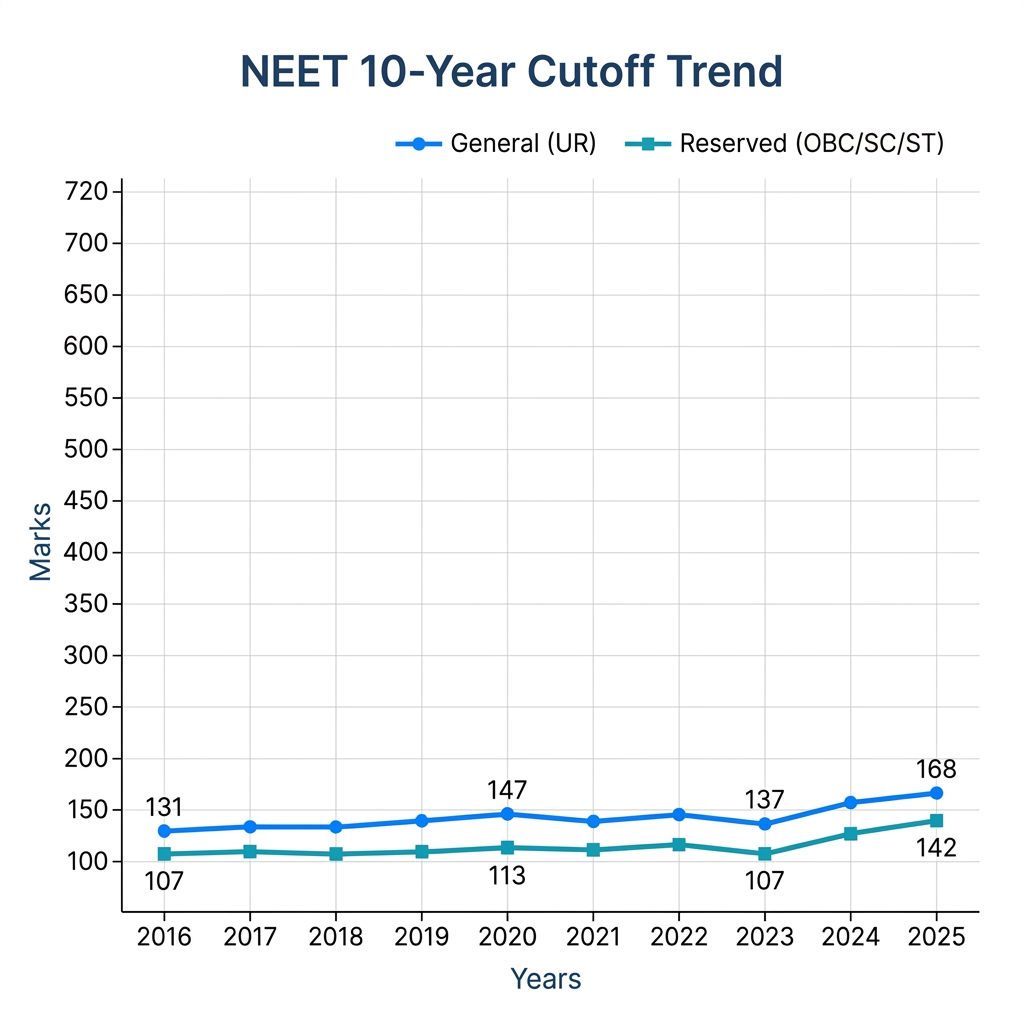
Below is a graphical representation of the NEET qualifying marks over the last decade. Notice the sharp rise in 2024-2025.
Why study the 10-year trend?
- Competition Insights: You can see that even with the same percentile (50th for Gen), the actual marks vary based on the “crowd” performance.
- Predicting 2026: Based on this data, we expect 2026 to stay in the 150-160 range for General and 120-130 for Reserved categories.
- Paper Difficulty: The dips in 2018 and 2022 show how a tougher paper can bring down the qualifying score.
Aim High: While qualifying is the first step, remember that for a Government Medical College seat, you should aim for 650+.
Check out our full NEET 2026 Cutoff Guide here
Recent NEET Updates
Stay ahead in your preparation with our latest blogs:
🚨 NEET 2027: CBT or Pen-Paper? Big Exam Mode Update! 💻 | NEET 2027 #Shorts
Step through it in the video below
🚨 NTA Official Advisory for NEET Aspirants | Must Know! | NEET #Shorts
Step through it in the video below
Decomposition: Fast or Slow? 🌿 | NEET Biology #Shorts
Step through it in the video below
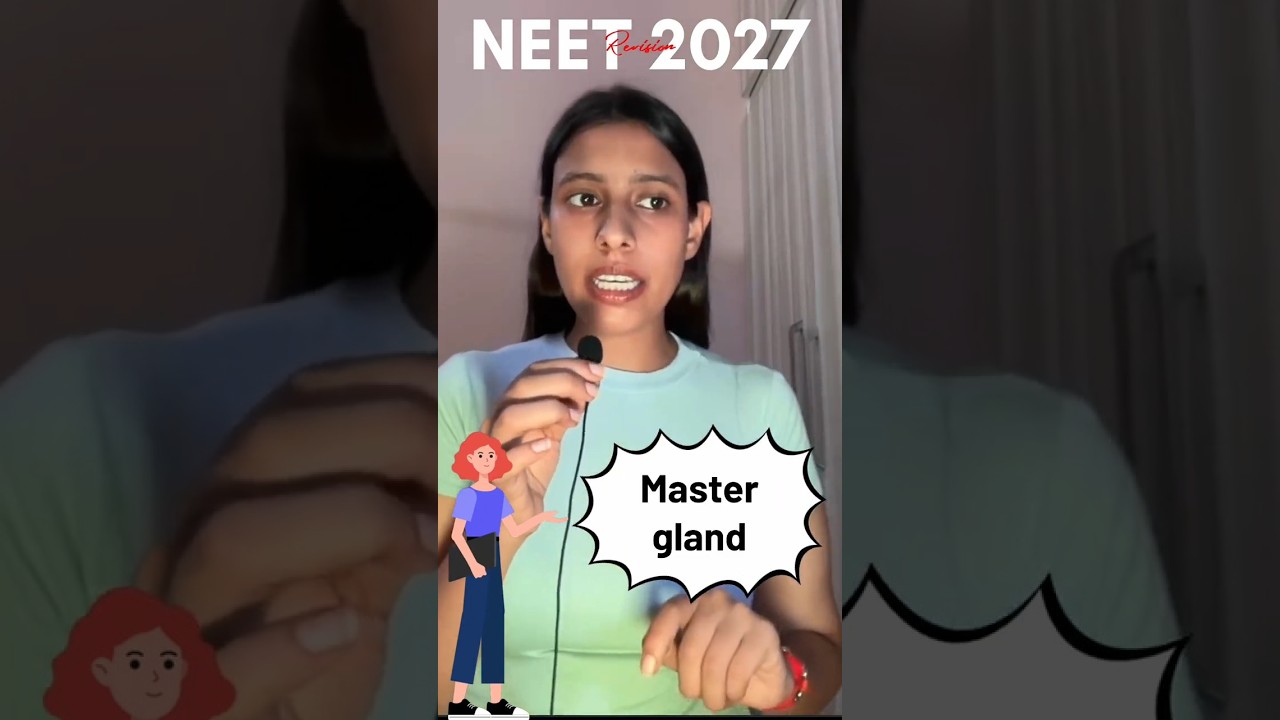
Pituitary Gland Complete Explanation 🧠 | Master Gland | Hormones & Functions | NEET 2027
A quick take for your exam prep
Ready to practice? Get the MockX App
Everything you need for NEET 2026 — available on Android & iOS.